

Our Services
At DSPI we treat a multitude of chronic non-cancer pain conditions.
‘Chronic Pain’ is defined as “any pain that persists beyond the usual recovery period, or, occurs along with a chronic health condition, such as arthritis”. It may also be defined as “any pain lasting longer than 3-4 months”. However, Chronic Pain may be ‘on’ and ‘off’ (continual, but not necessarily continuous) – and it typically affects individuals to the point where they can no longer work, eat properly, take part in physical activity, or enjoy life.
Some of the conditions we treat include the following: chronic headache and migraine, neck and low back pain, sciatica, arthritis and joint inflammation, nerve pain, fibromyalgia, and chronic regional pain syndrome (CRPS). Chronic pain is intimately related to mood and depression, as well as sleep quality, so we may help treat these conditions indirectly as well.
Pain, Insomnia, and Emotional Distress are the three components of the ‘Chronic Pain Triad’, and they affect each other bi-directionally – in other words, each one can make the other two worse, or better.
Someone with significant chronic pain almost certainly also suffers from some elements of depression and anxiety, and/or sleep dysthymia. Worsening chronic pain typically will lead to further decline in mood and sleep hygiene. Conversely, sometimes merely helping to improve someone’s sleep quality or mood, can improve their chronic pain.
All our spine (neuraxial) interventional procedures are performed under fluoroscopic image-guidance. At DSPI we have invested in state-of-the-art fluoroscopic equipment to provide patients the safest and most effective way to perform their spine procedures.
How we do it
-
In the simplest terms, a fluoroscopy is an x-ray machine that allows doctors to see detailed structures inside your body in real time. So instead of an x-ray beam taking a single image that is typically viewed later, fluoroscopy works by sending a continuous x-ray beam through the patient during a procedure. This can either be a series of still images as the physician moves a needle or probe to its target, or a continuous video. The image is then transmitted onto a TV monitor so that the body part, the surrounding structures, and any movements made by the physician can be viewed in continuous detail, while the radiation exposure risk to the patient during such procedures is generally minimal.
This allows for an extremely accurate placement of a needle tip or ‘cannula’ to the exact spot where it needs to be; and accurately delivers either medicine or a targeted microwave pulse, or ‘ablation’, more precisely and effectively. This means that the administering physician can inject an inflammation-reducing steroid and anaesthetic or create a targeted lesion of a pain nerve with maximum accuracy.
In comparison to surgery, fluoroscopically-guided injections are a non-operative, conservative method for the diagnosis and/or treatment of a variety of ongoing and chronic back pain or joint pain conditions. These injections are outpatient procedures that can help relieve pain quickly by reducing inflammation in the affected area or disrupting the pain nerves to an area. The benefit may be long-lasting, and sometimes curative.
-
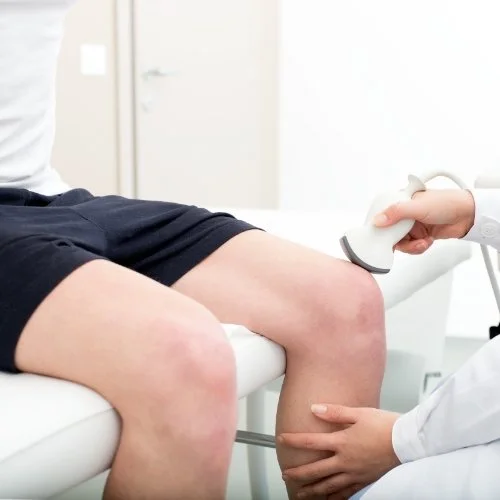
These steroid injections are used for difficult-to-reach areas of the body such as the spine, sacroiliac joint, or hip. They can help treat conditions like lumbar or cervical spine arthritis, lumbar disc herniation, sciatica, piriformis syndrome, sacroiliac joint (SI) issues, and some hip issues. For other body parts and joint injections, we typically use ultrasound guidance.
-
If your physician recommends a fluoroscopically-guided injection, you will then be scheduled for a procedure where a needle is placed precisely in the affected area where either a mixture of medication, typically including a combination of steroid and anesthetic will be injected, or a probe will deliver a microwave ablation of a pain nerve.
Pain relief following these injections is typically within one to two weeks, and, when coupled with physical therapy and/or oral medications, can be quite effective in reducing a patient’s pain. Although complications from these injections are very rare, it is important to know that there are potential side effects such as infections and bleeding, and in extremely rare circumstances permanent paralysis can occur. Your physician can help you determine if a fluoroscopically-guided injection is the best method of treatment for your back or joint pain.


Radiofrequency Ablation (RFA)
Radiofrequency ablation (RFA), also called radiofrequency neurotomy, uses radio waves to create a current that heats a small area of nerve tissue. The heat destroys that area of the nerve, stopping it from sending pain signals to your brain. RFA can provide lasting relief for people with chronic pain, especially in the lower back, neck and arthritic joints like the sacroiliac and knee joints.
More information on Radiofrequency Ablation can be found here at the Cleveland Clinic site.
-
At DSPI we use two types of RFA treatments: pulsed and continuous. These are used in a progressive, step-wise fashion, starting with p-RFA and moving to c-RFA only if inadequate or suboptimal response is achieved with p-RFA.
As the term implies, p-RFA is an ‘on-off’ stimulation that delivers heat to the nerve tissue at around 42C (similar to that of a high fever) whereas c-RFA delivers a continuous pulse of energy at almost twice the temperature of 80C. At this temperature the nerve tissue is destroyed, but with time it will eventually grow back.
The exact mechanism by which p-PRF controls pain is unclear (as the nerve ending is not actually destroyed), but it may involve a temperature-independent pathway mediated by rapidly changing the electrical field of the nerve ending that is pulsed, altering the pain signals it is able to produce. The procedure has an extremely high safety threshold, so we almost always attempt this first.
Our experience is that close to 60% of appropriately selected patients will respond to p-RFA with sustained relief after two rounds of this treatment, separated by a three-month interval. The onset of pain relief may occur anywhere from immediately after the procedure to about four to six weeks later. After two rounds of treatment, a majority will achieve sustained relief that may last up four to six months before repeat treatment is required with p-RFA. While c-RFA can be even more effective, as it is more intense, and may provide relief at times up to nine months at a time, there is also more potential for collateral damage.
While pain can return after the nerves regenerate, the treatment can be repeated on the same nerves if it has shown success in the past. And while not always a definitive cure, for some patients RFA is a long-term management tool for chronic pain.
The risk of complication from RFA in general is very low – extremely low with the p-RFA. On occasion, permanent nerve damage or pain can occur. In some people, their original pain may get worse. Other complications, including infection and bleeding at the needle site are also uncommon.
-
RFA treatments are performed in a procedure room. For most treatments you will be laying on the x-ray table either on your stomach (for lower back and SI joint procedures) or on your side (for neck procedures). Your healthcare providers will use monitors to watch your condition during the procedure. You will remain awake during the procedure so that you can answer your provider’s questions should they arise. Sedation to relax you is rarely required.
Your doctor will use local anesthetic to numb the area of your skin where the needles will be inserted. With the assistance of a radiology technician, your doctor will then use a fluoroscope, which is a special x-ray machine, to precisely guide a special needle to the troublesome nerve. Once the needle has reached the intended site, for c-RFA your doctor will test to confirm its proper position. This test consists of inserting a microelectrode through the hollow needle. Your doctor will ask you if you feel a tingling sensation or muscle twitch – either of these will confirm that the needle placement is correct.
A local anesthetic combined with either dextrose and/or a small amount of steroid – both of which may help in the ‘sclerosing’ of the pain nerve – are injected at the target. A radiofrequency pulse, or current, is then sent through the electrode tip of the needle to heat the identified portion of the nerve, disconnecting the nerve’s ability to send pain signals. Typically, several nerves are treated in this manner during a single procedure. The entire procedure usually takes no more than 10-15 minutes, and most patients tolerate the procedure well.
-
You can return home soon after the procedure, but you will need someone to drive you. Rest when you get home, and we always advise to ice the area where the needles were placed for 10-15 minutes at a time with a gel pack for 3-4 hours several times for the rest of that day. You should not engage in any strenuous exercise for the first 24 hours, but may then return to your normal activities.
You may feel some mild pain, muscle spasm or tenderness at the injection site for a few days, but this typically subsides fairly quickly, as is usually greatly mitigated by use of the ice packs as suggested above. Your doctor may also recommend some post-procedure physical therapy to regain your strength and flexibility and refer you to The Canadian Back Institute (CBI) on the floor below us, who are experts in spine rehabilitation. You will also have a follow-up appointment to check on your progress and to get answers for any questions you may have.

Epidural Steroid Injection
A lower back (lumbar spine) epidural steroid injection is an injection of anti-inflammatory medicine, the steroid, which is combined with some anaesthetic into the epidural space around the spinal nerves in your low back. The procedure may also be performed in the neck (cervical spine), or less commonly the mid-back (thoracic spine).
The main goal of lumbar epidural steroid injections is to manage chronic pain caused by compression, irritation or inflammation of the spinal nerve roots in your low back due to certain conditions or injuries. This type of chronic pain is called lumbar radiculopathy or radicular pain. It will typically radiate down from your low back into your buttocks, hips, legs and/or feet. Lumbar radiculopathy is often what is commonly referred to as sciatica. If present in the cervical spine this radiculopathy manifests as pain radiating down into shoulder, arm and/or hand.
Epidural steroid injections are among the most common type of therapy for managing radicular pain. Back pain is the fifth most common reason people seek medical care, and approximately 9% to 25% of people describe having radicular low back pain per year.
The nature of this ‘nerve pain’ caused by these conditions is referred to as ‘neuropathic pain’. The character of neuropathic pain is typically described by terms such as ‘shooting’, ‘burning’, ‘tingling’, ‘numbness’ or ‘electrical’ sensations. If severe, it can also cause muscle or ‘motor’ weakness, leading to limping, or tripping when walking, or in the case of the arm, a weakened grip and the dropping of items.
Most commonly an epidural steroid injection would be performed in the lumbar spine. Many conditions can irritate the spinal nerve roots in your low back and cause lumbar radiculopathy, including: Lumbar Degenerative Disc Disease, Lumbar Spinal Stenosis, Lumbar Osteoarthritis (Lumbar Spondylosis), Localized Low Back Pain, and Neurogenic Claudication.
More information on Lumbar epidural steroid injections can be found here at the Cleveland Clinic site.

Landmark-Based Nerve Blocks
Using nerve blocks to treat chronic pain can be especially helpful in the treatment of certain chronic tension-type and cervicogenic headache syndromes that have been resistant to more conservative types of management such as mindfulness, lifestyle modifications involving diet, exercise, and the removal of possible environmental triggers; and possibly an adequate trial of pharmacotherapy when appropriate, to address all three arms of the Chronic Pain Triad.
At times, nerve blocks may also be helpful for chronic joint pain to the shoulders, hips, and knees, and others, but more and more we are using ultrasound-guidance for these procedures. When injecting joints, we often add a steroid as a trial of an anti-inflammatory. If this is unsuccessful in providing prolonged relief, we may suggest progression to a more regenerative approach involving either platelet-rich plasma (PRP) or stem cell injections.
The way that nerve blocks work to relieve chronic pain is that they block the incoming or ‘afferent’ pain signals to the part of your brain that senses pain. We know that in people suffering from chronic pain, when we perform a functional MRI (fMRI) that lights up the parts of the brain that are active and firing, the pain centres are lit up in overdrive. This constant firing into these pain centres will over time cause a phenomenon known as central sensitization or wind-up. This can become a viscous feedback loop where over time you essentially ‘experience pain because you are in pain’.
Blocking these afferent pain signals with local anaesthetic produces an immediate break in the wind-up pain. What is interesting is that over time and with recurrent treatments, many patients will begin to experience pain relief from the nerve blocks that outlasts the expected duration of the anaesthetic itself, and the requirement for the nerve blocks reduces in frequency. While the exact mechanism of this is unknown, it is suspected that in allowing the pain centres to ‘take a breath’ while the pain signals are blocked, this somehow helps to reset these parts of the brain to a more normal wiring or ‘neuroplasticity’. Over time, and in combination with other means of pain management, this may often help reduce the central sensitization, and the requirement for regular interventions.

Botox for Chronic Migraine
Botox, (onabotulinumtoxin A) is an approved injectable treatment for the prevention of headaches in patients with chronic migraine (CM). The definition of CM is quite specific and involves “headaches in 15 days or more per month lasting 4 hours a day or longer, and, in at least 8 of those days the headaches must include several migraine features”. Migraine features includes things like nausea, vomiting, light or sound sensitivity, the presence of a migraine ‘aura’, or headaches being triggered by certain smells or foods (perfumes, red wine, chocolate, and strong cheese are common migraine triggers).
Most often, but not always, migraines are unilateral, occurring on only one side of the head (e.g. behind one eye, temple, or back of head, etc.) and are exceptionally intense, crippling, or stabbing in nature. They are often preceded by an ‘aura’ – the sensation of knowing a migraine will be coming on before it actually starts.
The mechanism of action of Botox in treating CM pain is most likely related to the inhibition or blocking of pain transmitters from the afferent (incoming) neurons to the meningeal (surface layer) of the brain, thereby dampening the peripheral pain signaling to the brain.
The efficacy of Botox as a preventative treatment for CM is attributed to the notion that its extracranial administration decreases the release of nociceptive (pain-producing) mediators, and the sensitivity of the meningeal pain receptors through downregulation of their activity.
The safety and efficacy of onabotulinumtoxin A for CM was demonstrated years ago in what is known as the PREEMPT clinical trial. It was a large multi-national trial. This has now become known as the ‘PREEMPT Protocol’, and involves a specific fixed‐site, fixed‐dose injection paradigm of Botox, injected into 31 prescribed sites via tiny injections to the head and neck region.
The treatment is typically given every 9-12 weeks, although sometimes as little as two to three times a year may be required over time to keep the CM at bay. When used in the correctly selected patients, Botox can be incredibly life-changing for many suffering from CM.
Botox treatment for CM is not covered under OHIP but is covered by most private insurance plans if you meet the inclusion criteria. Patients may also choose to pay privately if they have no coverage via their benefit plan. You can speak to your DSPI physician about whether you may be a candidate for a trial of Botox PREEMPT.
More information on Chronic Migraine can be found here at the Cleveland Clinic site.

Infusion Therapy
At DSPI we offer several IV therapies for chronic pain in our infusion suite. These are delivered by one of our nurses, while being supervised by one of our anaesthetists or qualified pain specialists.

Lidocaine
Lidocaine is a common local anaesthetic that can be delivered by intravenous (IV) infusion to relieve chronic pain. It has also proven to be useful in the treatment of certain types of headaches. Lidocaine is a sodium channel blocker and can block the pain receptors in the brain and spinal cord, making it a particularly effective treatment for neuropathic pain - pain caused by nerve damage or a malfunctioning nervous system.
Conditions lidocaine infusion is used to treat include:
- Chronic regional pain syndrome (CRPS I and II)
- Neuropathic pain (nerve pain)
- Failed back surgery syndrome (FBSS) / Chronic post-surgical pain
- Postherpetic pain
- Chronic diabetic neuropathy
- Fibromyalgia
- Vascular headaches
- Centralised pain
- Widespread pain
-
Prior to your appointment, your physician will explain the procedure to you in detail. They will have created a customized lidocaine infusion therapy plan based on your individual needs and its effects on your pain.
During the treatment you will sit in a comfortable reclining chair and an IV will be placed in a vein in your arm. A typical infusion takes 45 minutes. Expect a total stay of 1.5 hours, for pre and post infusion care and monitoring. You may want to bring a book or music to help pass the time, or other items that provide comfort, such as a blanket. Though you can return home soon after the procedure, you will need someone to drive you.
-
The lidocaine procedure affects the whole body, which allows your body’s pain response systems to relax and become less sensitive. There is a very low risk of complications with lidocaine infusions, and your vital signs will be monitored throughout the process. Most commonly, patients report mild nausea, dizziness, lethargy or "sleepiness", or a tingling sensation to the lips and mouth. You may begin to experience relief immediately during your lidocaine infusion, or over the coming days and weeks. Many people get long-term pain relief (pain relief lasting at least 1 month) after 2 or 3 lidocaine sessions.
Lidocaine is typically given every 8 weeks to maintain efficacy and benefit. OHIP will cover your lidocaine infusion up to 6 times in a fiscal year. Any additional infusions may be covered by third party insurance, or out of pocket. Your plan of care will be discussed with your pain physician during your assessment and subsequent follow-up visit to determine if regular maintenance treatments may be beneficial to helping you maintain your positive results. Your doctor may also recommend lidocaine infusion therapy in combination with cognitive behavioural therapy, physical therapy, and other treatments to help you manage pain and mood for the long term.

Ketamine
Like Lidocaine, Ketamine may also be very useful in treating a variety of chronic pain conditions, and as you will note, the overlap in indications for its use is very similar. However, the mechanism of action is by a different pathway, so in fact Ketamine infusion therapy can be used alone, or often combined with IV lidocaine, to treat pain for patients diagnosed with refractory pain conditions, having failed standard pharmacologic treatments. The primary mechanism of action of Ketamine is thought to be due to antagonism (blocking) of the N-methyl-D-aspartate (NMDA) receptors found in various locations in the central nervous system (CNS).
The activation or engagement of the NMDA receptors plays a major role in cognition, chronic pain, opioid tolerance, and mood regulation; it is considered the main receptor population involved in phenomenon of central sensitization described earlier when discussing the use of anaesthetic nerve blocks. As such, one can only imagine that the blocking of these NMDA receptors may have profound effects on these symptoms.
Due to NMDA receptors playing a significant role in mood regulation, IV Ketamine also has gained significant and growing popularity for the treatment of a number of mental health conditions unresponsive to standard treatment protocols, such as treatment-resistant depression, PTSD and chronic opioid addiction. These mental health indications are discussed separately in the section that follows.
Conditions ketamine infusion is used to treat include:
- Chronic regional pain syndrome (CRPS I and II)
- Neuropathic pain (nerve pain)
- Failed back surgery syndrome (FBSS) / Chronic post-surgical pain
- Postherpetic pain
- Trigeminal neuralgia and atypical facial pain
- Chronic diabetic neuropathy
- Fibromyalgia
- Cluster headaches, migraines, occipital neuralgia
- Centralised pain
- Widespread pain
-
As with IV lidocaine, prior to your appointment your physician will explain the procedure to you in detail. They will have created a customized ketamine infusion therapy plan based on your individual needs and its effects on your pain.
During the treatment you will sit in a comfortable reclining chair and an IV will be placed in a vein in your arm. A typical infusion takes 45 minutes. Expect a total stay of 1.5 hours, for pre and post infusion care and monitoring. You may want to bring a book or music to help pass the time, or other items that provide comfort, such as a blanket. Though you can return home soon after the procedure, you will need someone to drive you.
Ketamine is a dissociative anesthetic at high dose. This means that it can cause vivid dreams, hallucinations (‘emergence reaction’) or nightmares in high does. In the typical clinically administered low dosages for pain it has minimal effects on airway reflexes or respiratory rate, and the experience of dissociative symptoms is rare. In the event they were to occur, the supervising physician will manage these symptoms while present, and provide medication should it be necessary. Your vital signs will be monitored throughout the process.
More common side effects are mild drowsiness, some feelings of mild anxiety, emergence reaction or nausea, which also will be managed during the infusion, if necessary. For this reason, you should have nothing to eat from midnight the night prior to the infusion. Drink only clear liquids from midnight up until 2 hours prior to your treatment. Do not drink anything starting 2 hours prior to your treatment. Again, severe side effects with the low infusion dose required for chronic pain management are rare.
-
As with IV lidocaine, the IV ketamine procedure affects the whole body, which allows your body’s pain response systems to relax and become less sensitive. There is a very low risk of complications, but the feeling of sedation and post-infusion grogginess are typically more profound with ketamine. Ketamine works quickly, and you may begin to experience relief right away during the infusion, or over the coming days and weeks. Many people get long-term pain relief (pain relief lasting at least 1 month) after 2 or 3 ketamine sessions.
Again, you must ensure you have a responsible adult to drive you home following your procedure and discharge from the clinic. You may feel drowsy afterwards. You are not able to drive. You should not operate heavy equipment or make any important decisions for 24 hrs following treatment.
Ketamine may be given as a single infusion, or as a course of repeated infusions administered 2 to 3 times per week for a total of 4 to 10 infusions to make up a treatment series. Your plan of care will be discussed with your pain physician at your assessment and subsequent follow-up visit.
Unlike IV lidocaine, ketamine is not covered by OHIP for the purposes of chronic pain management. While some private insurers will pay, this treatment is mostly provided via private pay. If your physician recommends a trial of IV ketamine for you, and you wish to proceed, you can discuss the payment with the clinic management beforehand, to ensure you have an acceptable method of payment. Payment must be made in full prior to your infusion.

Regenerative Medicine
Regenerative medicine harnesses the body’s natural healing abilities to support, repair and restore damaged tissues, ligaments and joints. By focusing on healing at the source, regenerative therapies help reduce pain, improve mobility and accelerate recovery to enhance overall quality of life.
Platelet Rich Plasma (PRP)
PRP treatments target the same structures as prolotherapy. It involves drawing blood and then spinning it in a centrifuge to draw off the platelet rich and platelet poor plasma. These concentrated solutions are then injected into specific targets that are the areas requiring the most healing focus. These biologic solutions contain concentrated inflammatory and natural healing cells from your own body, which bring an immediate healing response to the targeted area(s). PRP injections often specifically target the intra-articular (inside the joint) pathology. It can be complimented by prolotherapy or perineurial treatment around the joint for a more comprehensive approach and a better clinical response. PRP treatments are also generally very safe with joint infection being the greatest risk.
After PRP treatment it is also not unusual to experience increased pain or inflammation for a few days and up to a week as the treatments are stimulating a targeted inflammatory healing response. We ask that patients avoid anti-inflammatory medications, if possible for the first 7-10 days.

Prolotherapy
Prolotherapy has been utilized for over 50 years as a method of treatment utilizing different concentrations of dextrose (sugar water) to specific joints, muscles, tendons and nerves to stimulate the healing/ regenerative processes. Prolotherapy treatment approaches are the basis for all regenerative therapies. Initially, prolotherapy treatment grew through patient results research, however in the past 10 years has been growing exponentially. Depending upon an individual’s medical condition, location and degree of injury, as well as their healing response, different solutions can be used. Besides dextrose other solutions (biologics) may include Platelet Rich Plasma (PRP), bone marrow isolate and possibly stem cell, depending upon availability. These areas of care are the leading edge of regenerative treatment with ongoing research guiding new and innovative approaches.
Most regenerative studies have shown that 2-6 treatments are typically needed for response in most conditions, generally at intervals of 2-4 weeks. After the condition has shown healing, repair and return to function, assisted by appropriate exercise, some individuals, depending upon the duration and degree of the initial injury and their overall health status, may require periodic “tune- ups” for ongoing longstanding results. Additionally prolotherapy treatments are very safe compared to most medical procedures.
After the treatment it is not unusual to experience increased pain or inflammation for a few days up to a week, as the treatments are stimulating a targeted inflammatory healing response. We ask that patients avoid anti- inflammatory medications, if possible for the first 7-10 days.
Frequently Asked Questions
-
Regenerative therapies are a good option for individuals with persistent or chronic pain to a joint, for example hip, knee, shoulder or elbow, or tendonitis, who have failed conservative therapies.
The procedures are minimally invasive, and can help avoid or delay surgery.
There are different factors that help us to determine which procedure is right for you, so it is best to come for a consultation so your condition can be properly evaluated.
-
Unfortunately, regenerative therapies and PRP treatments are not covered by OHIP and are therefore paid for out of pocket by the patient. The cost of the treatment varies based on the area and injury, and a personalized treatment plan will be discussed with you in detail prior to booking your procedure.
-
All regenerative treatments will take some time before a marked improvement is noticed. This is because these treatments rely on your body’s natural regeneration processes to stimulate the growth and repair of connective tissues.
Typically, patients start to notice early pain relief and functional improvement after 3-4 weeks, with continued progress and strengthening made in the months following the treatment. This is in conjunction with following your post-care instructions and adjunct therapies like physiotherapy.
-
Regenerative therapies are considered low-risk and generally safe, as they rely on your body’s own natural healing processes.
Some common but temporary side effects may include localized pain and tenderness, bruising and swelling.

TMS – Transcranial
Magnetic Stimulation
DSPI is excited to announce our partnership with leading experts in magnetic neurostimulation. In collaboration with Magnetix Health, an evidence-driven TMS service, we offer personalized neurostimulation for individuals with appropriately indicated mental health conditions as assessed by the psychiatric expert team.
Transcranial Magnetic Stimulation (TMS) has emerged as a promising treatment option for various neuropsychiatric disorders. Extensive research has highlighted its potential to alleviate symptoms associated with depression, anxiety, and other mental health conditions. Ongoing clinical trials continue to explore its efficacy across a spectrum of psychiatric disorders because it is safe and effective. It is even contending with antidepressant medications as a first-line option for treatment for depression.
TMS has sustained approval from regulatory authorities such as the U.S. Food and Drug Administration (FDA) and Health Canada, attesting to its safety and efficacy in clinical practice.
TMS therapy has demonstrated notable success in the management of treatment-resistant depression (TRD) and major depressive disorder (MDD), offering rapid and sustained relief for many individuals. Additionally, studies suggest its effectiveness in addressing symptoms of anxiety disorders, obsessive-compulsive disorder (OCD), and post-traumatic stress disorder (PTSD). We have experience treating a range of individuals including first-responders, veterans, and executives.
The mechanism of action underlying TMS involves applying magnetic fields to targeted regions of the brain, specifically modulating neural activity. By stimulating or inhibiting neuronal circuits implicated in mood regulation and cognitive function, TMS fosters neuroplasticity, or brain growth, and restores functional connectivity within the brain.
More information about TMS can be found here at the Magnetix Health site.
-
During the holistic assessment by a neurostimulation-experienced psychiatric team, you will receive a complete diagnostic evaluation to identify and measure your symptoms and the likely source of these symptoms, your treatment history, and other contributing factors causing your distress. Then treatment option with TMS will be fully explained to you. You will receive a customized TMS treatment plan based on your individual needs.
During an TMS session, patients sit in a comfortable chair as a specialized device delivers magnetic pulses to targeted areas of the scalp. You are awake during the treatment process and there is zero cognitive or memory side-effects from treatment. These pulses are administered in repetitive sequences, typically lasting between 3 to 10 minutes per session. The procedure is non-invasive and well-tolerated, with minimal discomfort reported by most individuals.
Treatment protocols typically consist of multiple sessions scheduled over several days, for example 8 sessions per day for 5 consecutive days, with the frequency and duration tailored to each patient's needs. We can make it flexible so you can continue your virtual meetings or other appointments / treatments during session breaks. A personalized treatment plan is devised to optimize therapeutic outcomes following an initial assessment by a qualified healthcare provider.
TMS side effects are generally mild and transient, the most common being mild headache or scalp discomfort during or after treatment. Serious adverse events are rare, making TMS a safe option for many people who have not responded to traditional therapies or who experience intolerable side effects from medications.
-
After completing a TMS session, people can resume their daily activities with minimal interruption. You can return to work and there are no driving restrictions. While some individuals may experience immediate improvement in mood and symptoms, others may notice gradual changes over the course of several sessions. After the acute course, benefits can last months to years depending on the person.
At this time, TMS is not OHIP-covered. Insurance coverage for TMS treatment may vary depending on individual policies and healthcare providers. We encourage discussing payment options and insurance coverage with your healthcare team to ensure access to this innovative therapy.